
Wavy Hairstyles: The Best of Both Worlds
Not straight, not curly — perfectly in between
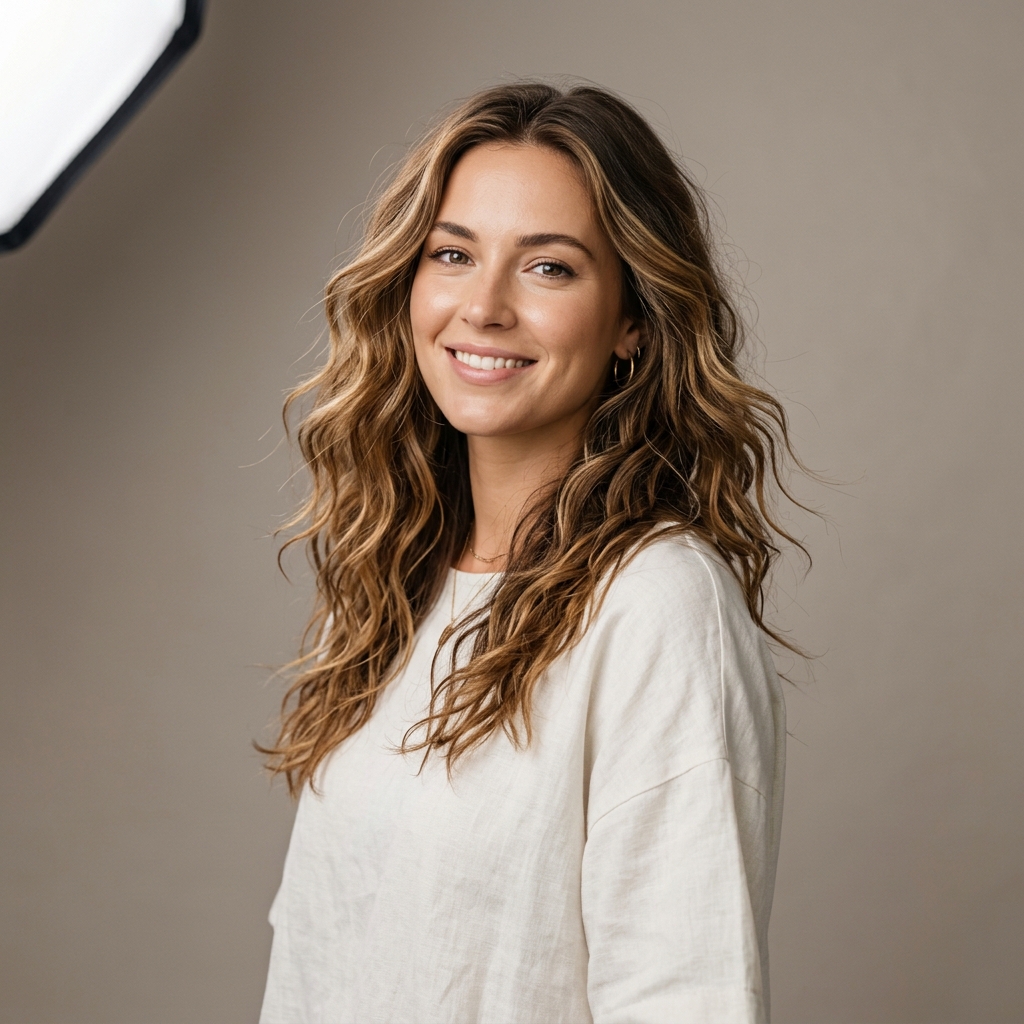
The Wave Spectrum
Wavy hair lives on a spectrum from barely-there bends to almost-curls. Understanding where your waves fall helps you choose the right cut, products, and techniques.
Wave Types Decoded
| Type | Pattern | Characteristics | Best Approach |
|---|---|---|---|
| 2A | Gentle S-wave | Fine, barely perceptible waves close to the scalp | Enhance with lightweight mousse |
| 2B | Defined S-wave | Waves start at mid-length, more pronounced | Wave cream + scrunching |
| 2C | Strong waves | Thick, wave-to-curl border, can frizz easily | Rich curl cream + diffusing |
HairPreview's AI uses the full 12-type Andre Walker classification to identify your exact wave pattern — critical for product and cut recommendations. Our density and thickness parameters further refine the analysis, because a 2B wave on fine hair behaves very differently from a 2B on coarse hair.
The Best Cuts for Wavy Hair
Long Layers
The foundation of most wavy cuts. Graduating from shorter face-framing pieces to longer lengths through the body, allowing waves to move independently without clumping.
Key technique: Ask for "internal texturing" — removing bulk from within each layer so waves have room to form without creating a triangular silhouette.
The Wavy Lob
The modern default for wavy hair. Collarbone-length with subtle layering. Long enough for ponytails, short enough for effortless styling. The wave pattern is most visible and defined at this length.
Beach-Wave Cut
A specific cutting technique where the ends are point-cut or razor-cut to create lived-in, piecey texture. This cut is designed to look its best with zero styling — perfect for wash-and-go lifestyles.
Enhancing vs. Smoothing
Not every day is a wave day. One of wavy hair's greatest advantages is its versatility:
Enhance Your Waves
- Apply wave enhancer to damp hair
- Scrunch sections upward toward the scalp
- Diffuse on medium heat or air-dry
- Finish with a light texture spray
Smooth Your Waves
- Apply heat protectant and smoothing serum
- Blow-dry with a round brush, pulling straight
- Finish with a flat iron on stubborn sections
- Seal with lightweight argan oil
Product Essentials for Wavy Hair
| Product | Purpose | Best For |
|---|---|---|
| Salt spray | Beach texture, volume | 2A-2B, fine to medium |
| Wave cream | Definition, moisture | 2B-2C, medium to thick |
| Mousse | Volume without weight | 2A, fine hair |
| Anti-frizz serum | Humidity protection | 2C, coarse hair |
| Leave-in conditioner | Moisture, detangling | All wave types |
Common Mistakes with Wavy Hair
- Over-washing: Strips natural oils that waves need. Aim for 2-3 washes per week.
- Brushing when dry: Disrupts the wave pattern and creates frizz. Detangle wet with conditioner.
- Using heavy products: Weighs down fine waves. Start light, add more only if needed.
- Ignoring the cut: Waves need a wave-specific cut — a good cut does 80% of the styling work.
- Fighting your texture: Embrace what your hair naturally wants to do and enhance it.
HairPreview's Wave Analysis
Our AI doesn't just see "wavy" — it identifies whether your waves are 2A, 2B, or 2C, measures density and thickness, and considers your face shape to recommend specific wavy cuts. The "technique" parameter lets you preview textured, layered, or blunt finishes on your waves, while the "product_finish" parameter shows how different styling approaches change the final look.
Style Variations
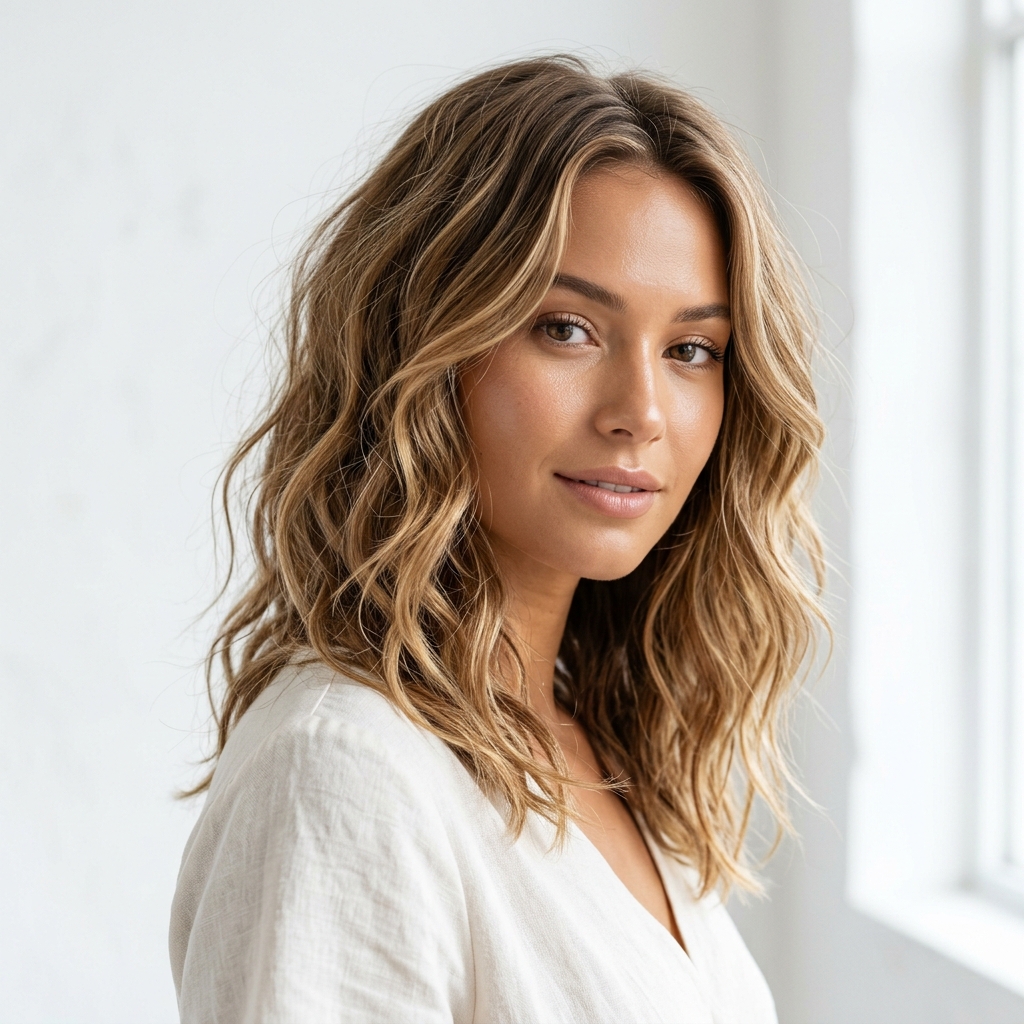
Beach Waves
Relaxed, tousled waves that look like a day at the ocean. Achieved with salt spray, braiding, or a curling wand with alternating directions.
All face shapes; medium to long hair; casual lifestyle
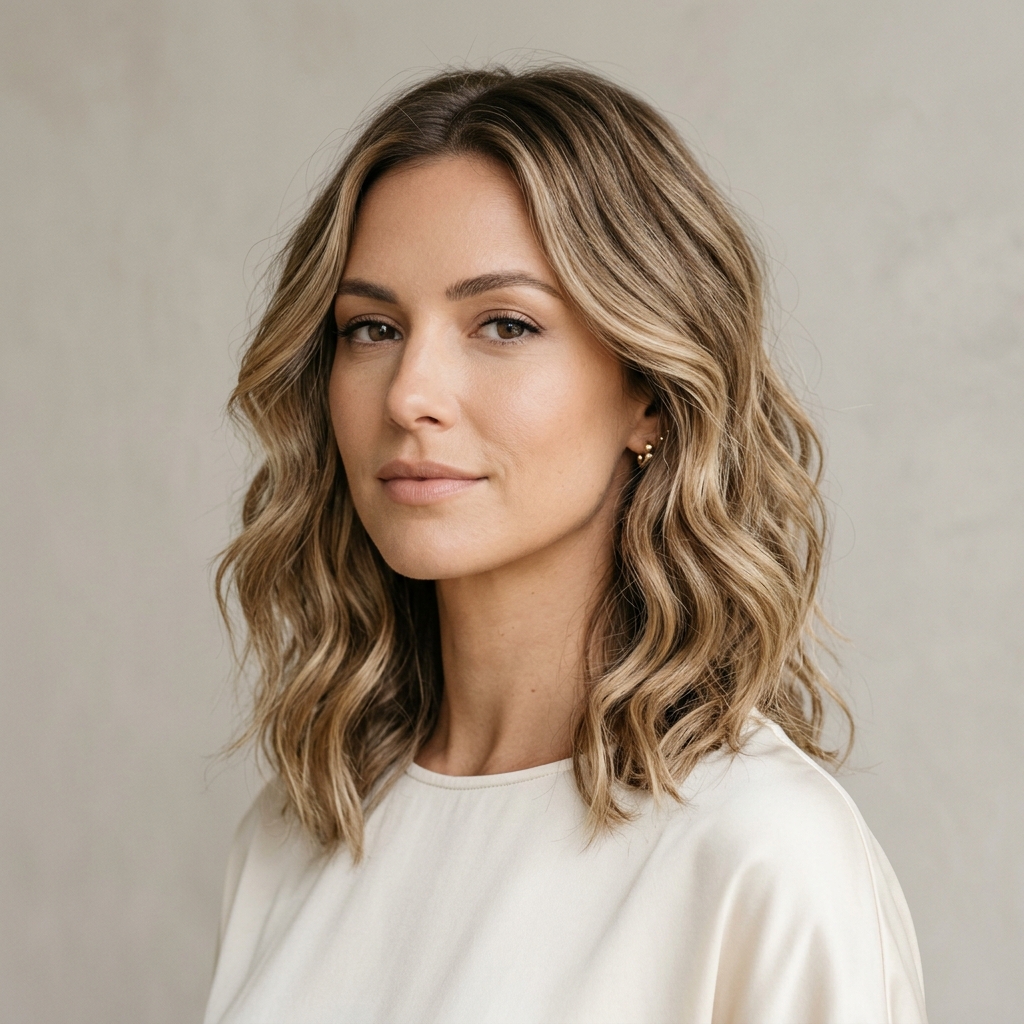
Wavy Lob
A long bob with enhanced natural wave. The perfect blend of structure and movement, falling between chin and collarbone.
Round and square faces; fine to medium density hair
S-Wave Blowout
Polished, structured S-shaped waves created with a round brush and blow dryer. Glamorous and editorial.
Oval and heart faces; formal occasions; all hair densities
Face Shape Compatibility
Waves add dimension to already balanced proportions. Any wave style works.
oval face guide →Wavy layers create vertical flow that elongates. Start waves below the chin.
round face guide →Soft waves are the perfect antidote to angular features — they add organic curves.
square face guide →Waves at chin level add width where the face narrows. Avoid too much crown volume.
heart face guide →Side-swept waves add the horizontal dimension that long faces benefit from.
oblong face guide →Chin-length waves balance narrow forehead and chin with wide cheekbones.
diamond face guide →Frequently Asked Questions
Start by using a sulfate-free shampoo that doesn't strip your natural texture. Apply a wave-enhancing mousse or cream to damp hair, scrunch upward, and either air-dry or diffuse on low heat. Avoid brushing dry wavy hair — use a wide-tooth comb on wet hair instead. HairPreview's hair texture analysis can identify your exact wave pattern (2A, 2B, or 2C) for targeted product recommendations.
Wavy hair (Type 2) forms S-shaped patterns and lies flatter to the head than curly hair (Type 3), which forms defined spirals. Wavy hair is generally easier to straighten and has less volume than curly hair. Type 2C (strong waves) is the borderline between wavy and curly — HairPreview's 12-type Andre Walker classification system can pinpoint exactly where your hair falls.
The most popular no-heat method is braiding damp hair before bed — two braids for looser waves, four for tighter ones. Other techniques include twisting sections into buns, using fabric rollers, or scrunching with salt spray and air-drying. Results depend on your natural texture and hair density.
Generally yes! Layers help wavy hair achieve its full potential by removing weight that can pull waves flat. Face-framing layers are particularly effective. However, fine wavy hair should have fewer, longer layers to avoid looking thin. HairPreview's density parameter helps determine the ideal layering approach.
Find Your Perfect Match
Upload your photo and let our AI engine analyze your face across 15 parameters — face shape, bone structure, hair texture, and more — for personalized hairstyle recommendations.
Try HairPreview Free →